Showing posts with label poster. Show all posts

Thursday, 27 April 2017

Pit of Darkness (1961, Lance Comfort, UK: Butchers Film Distributors)


Pit of Darkness opens on a bomb site somewhere in London, still a common thing in the early 1960s. A young boy spots what appears to be a body down amongst the rubble, but when he investigates he discovers the man is still alive. Richard Logan (William Franklyn) slowly comes round and realises that he has been "coshed" by some ruffians. He thanks the boy for his help and makes his way home. When he walks in his wife Julie (Moira Redmond) is shocked: Richard thinks he is only three hours late, but he has actually been missing for three weeks. He has no memory of his whereabouts and spends the next eighty minutes piecing together the mystery: the fact that he works for a company who specialise in making burglar-proof safes might have something to do with it.


Pit of Darkness came late in the career of Lance Comfort, a solid British director who specialised in supporting features, more commonly known as 'B' films. To Hammer fans he will be best known as the director of the now lost comedy The Ugly Duckling (1959) with Bernard Bresslaw, or at least if it is not lost it is a film which no one wants to let out of the Hammer vault. Pit of Darkness forms part of a sort of "Darkness" trilogy in Comfort's career, which was most likely unintentional. He previously directed Daughter of Darkness (1948), as well as the horror classic Devils of Darkness (1965) shortly before he died. Darkness is a good, go-to word to use in a film title, as it can mean different things depending on the theme of the film. In this particular case the pit of darkness in question is purely metaphorical. Admittedly Logan does wake up in a bomb site, a pit of darkness of a sort, but it is the darkness of amnesia which is he trying to claw out.

The film was released with a 'U' certificate from the British Board of Film Censors following some brief cuts. It seems to have been well received. In the December 1961 issue of Monthly Film Bulletin Pit of Darkness was summarised as having a "Complex, fanciful plot made plausible by effective writing and direction. The pace is brisk, there are some spirited fisticuffs, and there is the personality of William Franklyn - unbeatable in suggesting solid virtues behind a rakish, smooth exterior." In the excellent The British 'B' Film by Steve Chibnall and Brian McFarlane Pit of Darkness is compared to other Lance Comfort films, who despite the low budgets and quick turnaround generally managed to raise them above being merely formulaic: "All Comfort's films are persuasive narratives, marked by absence of sentimentality and the whiff of human reality, by a feeling for melodramatic tension and for thematic contrasts underlined by a visual style which can move into the expressive and the metaphoric." (p. 142-143)


Butcher's Film Distributors were the typical independent distribution company. It appears they were in business as distributors and occasional producers from the early 1930s, mainly with factual short films such as Strictly Vegetarian (1932, unknown) and the occasional western or thriller like Gorilla Ship (1932, Frank Strayer, US: International Film Studios). 


They were still submitting films for classification in the late 1970s, mostly of the Hot Dreams (Amore libero, 1974, Pier Ludovigo Pavoni, Italy: Aquila Cinematografica) or French Nympho (Candice Candy, 1978, Renau Pieri, France: Les Films de l'Epeé) variety. According to my 1970 copy of the The British Film and Television Year Book Butcher's were by then based on Wardour Street in Soho and the managing director was the London-born John I. Philips, of whom I'm ashamed to say I know nothing. Butcher's made around twenty feature films, mostly in the 1950s and early 1960s, perhaps the best known being the proto-slasher Cover Girl Killer (1959, Terry Bishop, UK: Butcher's Film Distributors) starring a pre-Steptoe Harry H. Corbett.


A vital point in the plot pivots on Logan's recollection of the song "My Heart is the Lover," which we hear over and over throughout the film, so it is interesting to see that the song was released in sheet music form. This is most likely the only product tie-in for Pit of Darkness. It is an enjoyable thriller featuring safe-cracking, explosions and a blonde femme fatale, played by Jacqueline Jones. When she first appeared on screen I was convinced it was Caron Gardner. The film also features performances from Anthony Booth, later to be Robin Askwith's best mate and Tony Blair's father-in-law, and a young and very beautiful Nanette Newman. 

I saw this when it was broadcast by Talking Pictures TV, the freeview channel which is connected to distributor Renown Pictures. If you are a fan of obscure British 'B' movies this is one of the best channels out there. They don't always have the best picture quality, or even the correct aspect ratio, but it is the only place you are likely to see this sort of stuff.


Friday, 30 December 2016

I Start Counting (1970, David Greene, UK/ USA: Triumvirate Productions)


Wynne Kinch (Jenny Agutter) was adopted. She had been raised Catholic by her mother, but at some stage prior to seven, still old enough to know about what was happening, she was put up for adoption and taken into a loving family with two older brothers. Considerably older. Of the brothers, George (Bryan Marshall) is her favourite. And now, at the age of fourteen, Wynne's familial love is turning into a sexually driven lust and obsession. Denying that it is incest because she was adopted, Wynne feels completely justified in having sexual urges towards her thirty-two year old brother. This leads to frustration that he does not see her in that way, but merely as his younger sister.

Wynne (Jenny Agutter) wants George (Bryan Marshall) to see her as a woman

Wynne and her adoptive family live in a new high rise block in Bracknell, Berkshire. Everything around her is either white or concrete, and all of it new, yet she still yearns to spend time in their old home: a large, crumbling farmhouse on the other side of the park. It is condemned and marked for demolition, like all of the other Victorian property we see in the area. Anything not brand new, it seems, is unwanted. Wynne's mother (Madge Ryan) exclaims to her father (Billy Russell), who also lives with them, "This place is a palace compared to where we used to live." "Oh yes?" he replies, "and you name me a palace where the doorknobs keep falling off." There is something rotten at the heart of this new brutalist utopia.

This crumbling facade not only represents the forbidden love at the centre of the family, but the possibility that George may be a killer of young women. Bodies have been found in the park near their old home, and the police are seemingly without a lead. When Wynne spots scratch marks on George's back, and finds his jumper covered in blood, she begins to suspect that maybe he is the culprit. Far from putting her off, this causes her love for him to grow stronger, feeling a need to protect him. Only she truly understands him and can help him. She fantasises about George kissing her, or walking in on her in the bath. Wynne confesses her sinful thoughts to a priest during the day, and caresses herself in bed at night.


Throughout the film she becomes an amateur detective, following him around and searching for clues in his bedroom. The occasional red herring is also thrown in, such as the interest her other brother, the pill-popping Len (Gregory Phillips), shows in the grisly details as reported in the press: "You'd think if he was going to kill all these people, he'd at least rape them. It seems such a waste." He even keeps a scrapbook of press cuttings, a sure sign of any serial killer. There is also the occasional appearance of a potentially sleazy bus conductor (Simon Ward), who grabs Wynne by the wrist and tells her "Your skirt's too short." Ultimately Wynne does solve the crime, and in the process is forced to grow up and learn a few unpleasant things about life.


I Start Counting begins with a long panning shot around Wynne's bedroom, and the opening credits then roll over her morning routine. We see her open curtains, eat breakfast and get dressed. Continuing her routine, and in full close-up, Wynne pulls on her underwear, puts on a bra and gets into her school uniform, of which the skirt is short. This is one of those films which belongs in the same category as Baby Love (1968, Alastair Reid, UK: Avton Films), All The Right Noises (1971, Gerry O'Hara, UK: Trigon Productions) or Twinky (1970, Richard Donner, UK/ Italy: World Film Services), where schoolgirls are objects of sexual awakening and desire. Twinky's tagline (on the US poster, where it had been renamed Lola) was the astonishing "She's almost 16, he's almost 40." Pop music also contributed to this concept, whether it was Neil Sedaka singing in 1961 "Happy birthday sweet sixteen, Tonight's the night I've waited for, Because you're not a baby anymore," or the Rolling Stones cheerfully proclaiming "There'll be a feast if you just come upstairs, But it's no hanging matter, It's no capital crime, I can see that you're fifteen years old, No I don't want your I.D." in 1968. 

Jenny Agutter may have been seventeen, but the schoolgirl she was portraying was fourteen.
The creepy rabbit to the left plays a small part in the plot.

Wynne Kinch may have been fourteen in I Start Counting but Jenny Agutter was seventeen, eighteen by the time the film was released. This may serve as some sort of justification in shooting her dressing in such a voyeuristic fashion, or in the way the camera often looks up the miniskirt of her friend Corinne (Claire Sutcliffe), whose colourful knickers are flashed throughout the film, despite her also being fourteen. Agutter also posed for a series of blatantly sexual photos to promote the film, perhaps demonstrating just how much of a woman Wynne has become despite her young age. 1960s and 1970s culture was preoccupied with the first flowerings of sexual desire in teenage girls (and underage girls). Sadly the events of the last few years, and Operation Yewtree in particular, have taught us the dark truth behind this cultural acceptability.

According to the 1970 edition of The British Film & Television Year Book, if you had wanted to reach Jenny Agutter she could be contacted care of Denys Becher, 9A Marylebone High Street, London, W.1.


The film is adapted from Audrey Erskine Lindop's novel from 1966, and the plot feels similar to the popular, although far more graphic, schoolgirl-based Italian crime films of Massimo Dallamano: What Have You Done to Solange? (Cosa avette fatto a Solange? 1972, Italy/ West Germany: Clodio Cinematografica) and What Have They Done to Your Daughters? (La polizia chiede aiuto, 1974, Italy: Primex Italia). Perhaps Dallamano was familiar with this film, or perhaps it is coincidence, but What Have You Done to Solange? is also set in Britain, and features the murder of a schoolgirl in a park. There are also similarities to the British thriller Assault (1971, Sidney Hayers, UK: George H. Brown Productions), which again features schoolgirls being murdered in parks. This was clearly a theme which needed exploring in the early 1970s.

The Pan Books tie-in edition of The Ravine by Kendal Young, now known as Assault.

I Start Counting was directed by David Greene, who had previously directed, amongst others, The Shuttered Room (1967, UK: Seven Arts) and The Strange Affair (1968, UK: Paramount Pictures), the latter also featuring an underage relationship, this time between a schoolgirl and a policeman. David Greene had angered many people when he burned down a real historic building in Norfolk at the climax of The Shuttered Room, the full story of which can be read here. I Start Counting also features the destruction of real property, and was perhaps something Greene looked for in his films as a way of enhancing production value. He had a varied and fascinating career, working in both film and TV between Hollywood and the UK. Monthly Film Bulletin praised his direction of this film, stating it was "a coherent and accomplished piece of filmmaking."


Sadly I Start Counting was only seen in Britain in the cinema in 1970, where it played with an AA certificate from the BBFC, and then again once on TV in the 1990s, as far as I can tell. It is a compelling and well-constructed film which was also hugely significant in the career of Jenny Agutter, coming out just a month before The Railway Children (1970, Lionel Jeffries, UK: EMI Film Productions). Monthly Film Bulletin describes her performance here as "Something of a remarkable balance, poised between naïveté and delicacy to suggest a perfectly natural innocent." If you want to see this performance the only way to currently view I Start Counting is on Youtube, where it appears to have been taken from a VHS copy. It is thankfully in its correct aspect ratio, which suggests the film was released on video in the U.S. in a widescreen version, unless it was shown on TV in widescreen and this is an off air recording. Perhaps eventually this will see a restored release as part of Network's ongoing British Collection. If you have any interest in British cinema of the period, I Start Counting is well worth your attention. And just what is it she is counting? Watch the film and see if you can work it out for yourself.


Tuesday, 21 October 2014

From the Orient With Fury UK Quad!


I took the title of this blog, and my PhD itself, from a 1960s Eurospy film released in the UK by Compton. It was one of the Agent 077 films. These were Italian/ French/ Spanish co-productions. 

Whilst I have yet to find a copy of this film itself, last weekend I found the quad poster. It was in the same shop I bought the lobby cards almost two years ago, in a box of posters I had never seen before. It has been folded, probably for most of the last fifty years, but it is still in remarkably good condition. The artwork is crude, and Ken Clark is all out of proportion and looks like he is in a western, but I am still happy to have found it. This will take a prominent place in the visual elements of my study. 

Agent 077's name was Dick Malloy, and he was played by the American actor Ken Clark, who despite some success at home spent the majority of his career working in Italian films.

According to the Kiss Kiss Kill Kill archive there were three Agent 077 films, and some of the posters advertised that fact. It is interesting that Compton chose not to use that in their materials, perhaps trying to play down the Bond connection for suspicious British audiences. 


Argentinian poster for From the Orient With Fury (1965)

Italian poster for Mission Bloody Mary (1965)

Italian poster for Operation Lady Chaplin (1966)


Wednesday, 31 July 2013

Literature Review

I thought it may be of interest to someone out there if I posted my bibliography on here. This is not meant to be the definitive word on the topic under investigation, but I hope it's fairly thorough.


Bibliography

Barker, M. and Brooks, K. 1998, Knowing Audiences: Judge Dredd: Its Fans, Friends and Foes, Luton, University of Luton Press

Bayman, L. and Rigoletto, S. eds. 2013, Popular Italian Cinema, 2013, Chippenham, Palgrave Macmillan

Benzel, T. 2012, Muchas Gracias Seňor Lobo: Paul Naschy Memorabilia, Birkenfeld, Kessler & Benzel GbR

Bergfelder, T. 2005, International Adventures: German Popular Cinema and European Co-Productions in the 1960s, Oxford, Berghan Books

Branaghan, S. edited by Chibnall, S. 2006, British Film Posters: An Illustrated History, Cambridge, BFI/ Cambridge University Press

Chapman, J., Glancy, M. and Harper, S. 2007, The New Film History: Sources, Methods, Approaches, 2007, Basingstoke, Palgrave Macmillan

Chibnall, S. and McFarlane, B. 2009, The British 'B' Film, Camberley, BFI/ Palgrave Macmillan

Chibnall, S. 2013, 'Rome, Open for British Production: The Lost World of 'Britalian' films, 1946-1954', Historical Journal of Film, Radio and Television, 33:2, 234-269

Creepy Images [journal] available through: www.creepy-images.com 

Davies, R. R. 2011, Kiss Kiss Kill Kill: The Graphic Art and Forgotten Spy Films of Cold War Europe, St Albans, Picture and Sound Ltd

Devraj, R. Duncan, P. ed. 2010, The Art of Bollywood, Hong Kong, Taschen

Dougall, A. consultant ed. Gassner, D. 2012, James Bond: 50 Years of Movie Posters, London, Dorling Kindersley

Dyer, G. 1982, Advertising as Communication, London, Routledge

Eley, G. 2005, A Crooked Line: From Cultural History to The History of Society, London, The University of Michigan Press

Garret S. Balazs, A. ed. 1996, Hollywood Handbook, New York, Universe Publishing

Grant, K. 2011, Any Gun Can Play: The Essential Guide to Euro-Westerns, Godalming, FAB Press

Hall, S. and Neale, S. 2010, Epics, Spectacles and Blockbusters: A Hollywood History, Michigan, Wayne State University Press

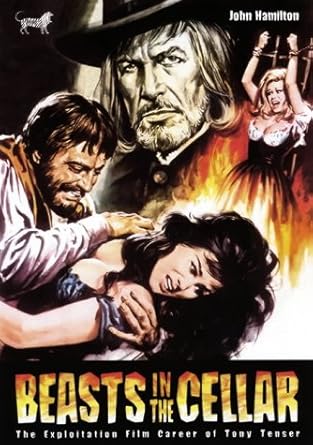
Hamilton, J. 2005, Beasts in the Cellar: The Exploitation Film Career of Tony Tenser, Godalming, FAB Press

Hanson, S. 2007, From Silent Screen to Multi-Screen: A History of Cinema Exhibition in Britain Since 1896, Manchester, Manchester University Press

Hantke, S. ed. 2004, Horror Film: Creating and Marketing Fear, Mississippi, University Press of Mississippi

Hawkins, J. 2000, Cutting Edge: Art Horror and the Avante-garde, Minnesota, The University of Minnesota Press

Hearn, M. 2010, The Art of Hammer, China, Titan Books

Hughes, H. 2004, Once Upon a Time in the Italian West, Padstow, I.B. Taurus

Hunter, I. Q. 2013, British Trash Cinema, Basingstoke, BFI/ Palgrave Macmillan

Jackson, N. 2012, 'Stained With the Blood of the Marketing Department', paper given at Cine Excess, London

Lamberti, E. ed. 2012, Behind the Scenes at the BBFC: Film Classification from the Silver Screen to the Digital Age, London, BFI/ Palgrave Macmillan

Murphy, R. ed. 1997, The British Cinema Book, 1st edition, London, BFI

Nava, M. 2007, Visceral Cosmopolitanism: Gender Culture and the Normalisation of Difference, 1st edition, London, Bloomsbury/ Berg Publishers

Nowell-Smith, G. and Ricci, S. eds. 1998, Hollywood and Europe: Economics, Culture and National Identity 1945-95 , London, BFI

Sarowitz, Sam, 2008, Translating Hollywood: The World of Movie Posters, New York, Mark Batty Publisher

Schaefer, E. 1999, "Bold! Daring! Shocking! True!" A History of Exploitation Films, 1919-1959, Durham, Duke University Press

Shipka, D. 2011, Perverse Titillation: The Exploitation Cinema of Italy, Spain and France, 1960-1980, North Carolina, McFarland

Smith, A. 2012, 'Cowboys and Cannibals: an interview with Ruggero Deodato', Diabolique, Issue no. 8, Jan/ Feb 2012

Spicer, A. and McKenna, A.T. 2013, The Man Who Got Carter: Michael Klinger, Independent Production and the British Film Industry, 1960-1980, London, IB Taurus

Trevelyan, J. 1973, What the Censor Saw, Slough, Michael Joseph Ltd

Waller, G. A. 2002, Moviegoing in America, Oxford, Blackwell Publishers


Monday, 24 June 2013

A poster and a brief introduction

I had to create a poster to illustrate my research intentions for a conference at Brunel back in April. I thought I would share it here, as it summarises my research fairly well. Hopefully. That was the point after all.

I realised once I had printed it on to A3 that the text at the bottom was too small, and I'd wasted a lot of space up at the top. At the conference I was put between posters about research in The Oman and Saudi Arabia, and I felt a touch self-conscious about my choice of central image. It's taken from publicity material for a German Bond-spoof called Bonditis. I will probably post about that film here at some point soon.

So here's the poster. If you click on the link you can view it bigger on Flickr so you can zoom in on the tiny text.